
Some images on this website are created using AI. These images are intended for illustrative and creative purposes only and are not meant to depict or represent any actual person.

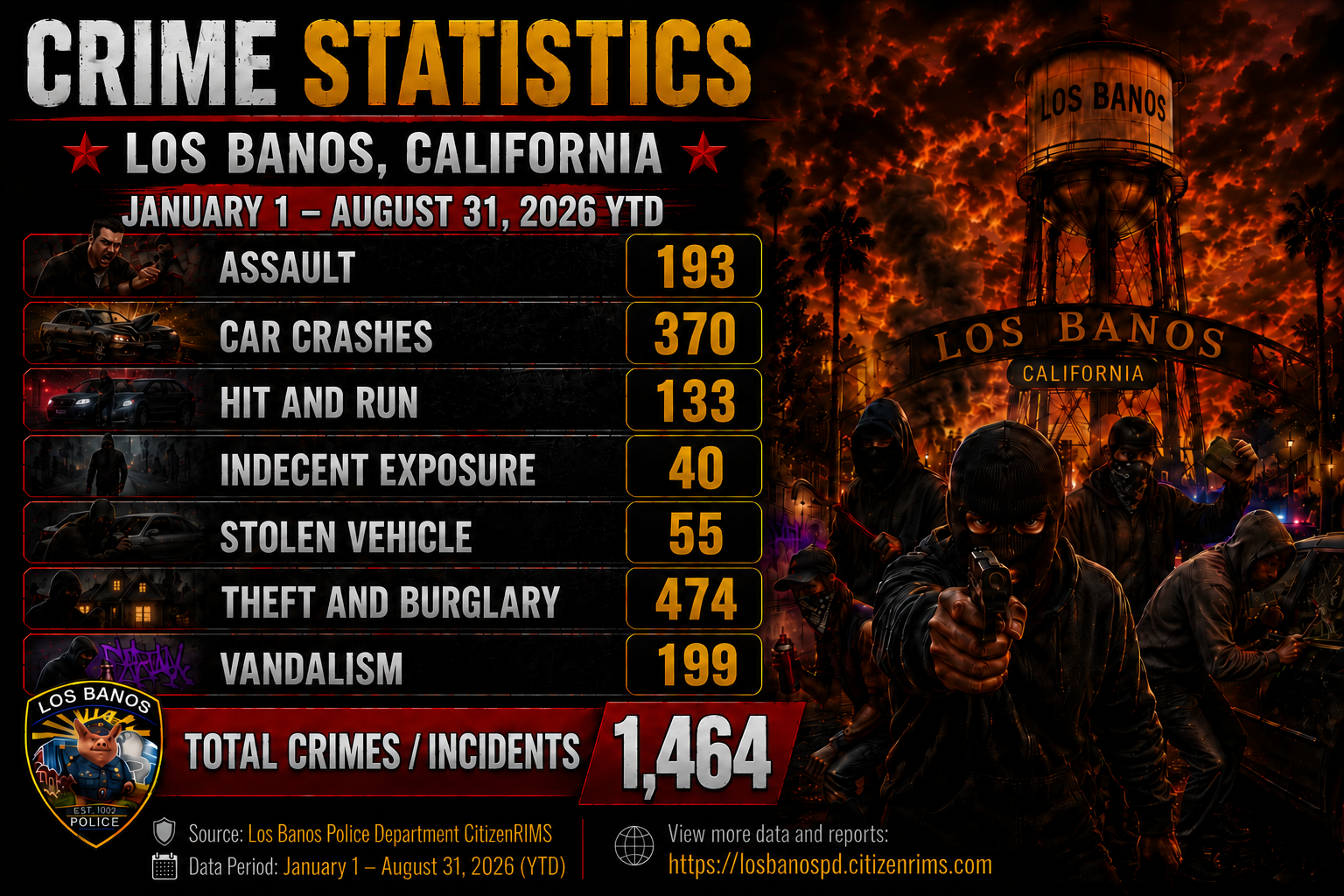

Crime Skyrockets in Los Banos - 2026 August - Year To Date - As the Town Grows the Crime Grows Even Faster
Through August 2026, 1,464 incidents have been recorded in Los Banos. For a small city, that number carries weight. Each report represents more than a statistic — it represents disruption, loss, and moments that altered someone’s sense of security.
Theft and burglary continue to stand out as one of the most dominant categories, with 474 reported cases. More than three hundred incidents involving stolen property, break-ins, or unlawful taking — from stores, vehicles, homes, and individuals — have created financial strain and frustration across the community. This category remains one of the leading contributors to overall crime activity, highlighting how frequently opportunity and vulnerability intersect.
Traffic-related incidents also make up a substantial portion of the reports. Car crashes have reached 370 incidents, making them the second-highest reported category. Each collision represents more than damaged vehicles; many involve injuries, roadway disruptions, emergency response activity, and long-lasting impacts on those involved. Alongside those crashes are 133 hit-and-run incidents, where drivers left the scene, leaving victims without immediate accountability or resolution.
Vandalism has reached 199 reported cases, reflecting repeated acts of property damage affecting businesses, public areas, vehicles, and private residences. Graffiti, broken fixtures, damaged signage, and other forms of destruction leave visible reminders that ripple through neighborhoods and commercial districts alike. The increase in vandalism continues to place financial burdens on property owners and contributes to growing concerns about community appearance and public safety.
Assaults have been reported 193 times, representing situations where conflicts escalated into physical harm or threats of violence. These incidents carry consequences beyond the immediate moment, impacting community confidence, personal well-being, and residents' sense of security.
Vehicle-related crime remains another concern, with 55 stolen vehicles reported so far this year. For victims, the loss often means more than the theft of property — it can mean missed work, financial hardship, insurance complications, and significant disruption to daily life. Each stolen vehicle also places additional investigative demands on local law enforcement resources.
Finally, indecent exposure has been reported 40 times. While smaller in number compared to other categories, these incidents can be deeply disturbing for those directly affected and for residents who expect public spaces to remain safe and family-friendly environments.
As June concludes, the year-to-date total stands at 1,464 incidents. For Los Banos, the number reflects more than crime statistics — it represents real events affecting residents, businesses, visitors, and the everyday rhythm of life in a community experiencing rapid growth. As the city continues to expand, the rising volume of reported incidents serves as a reminder that maintaining public safety remains an ongoing challenge requiring attention from both community members and local leadership.
All the details at CitizenRIMS: https://losbanospd.citizenrims.com/map
Living in Los Banos is Not Safe
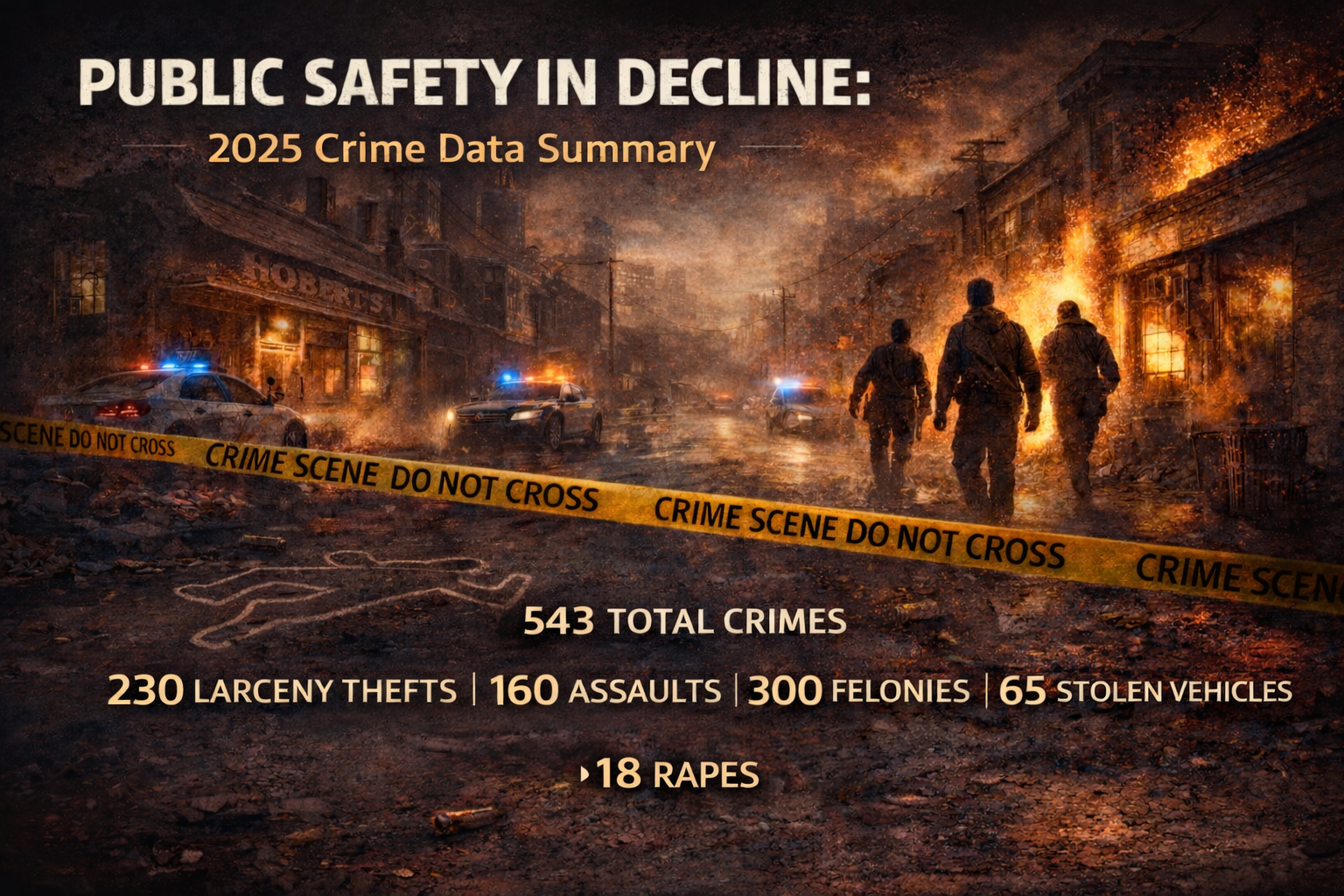
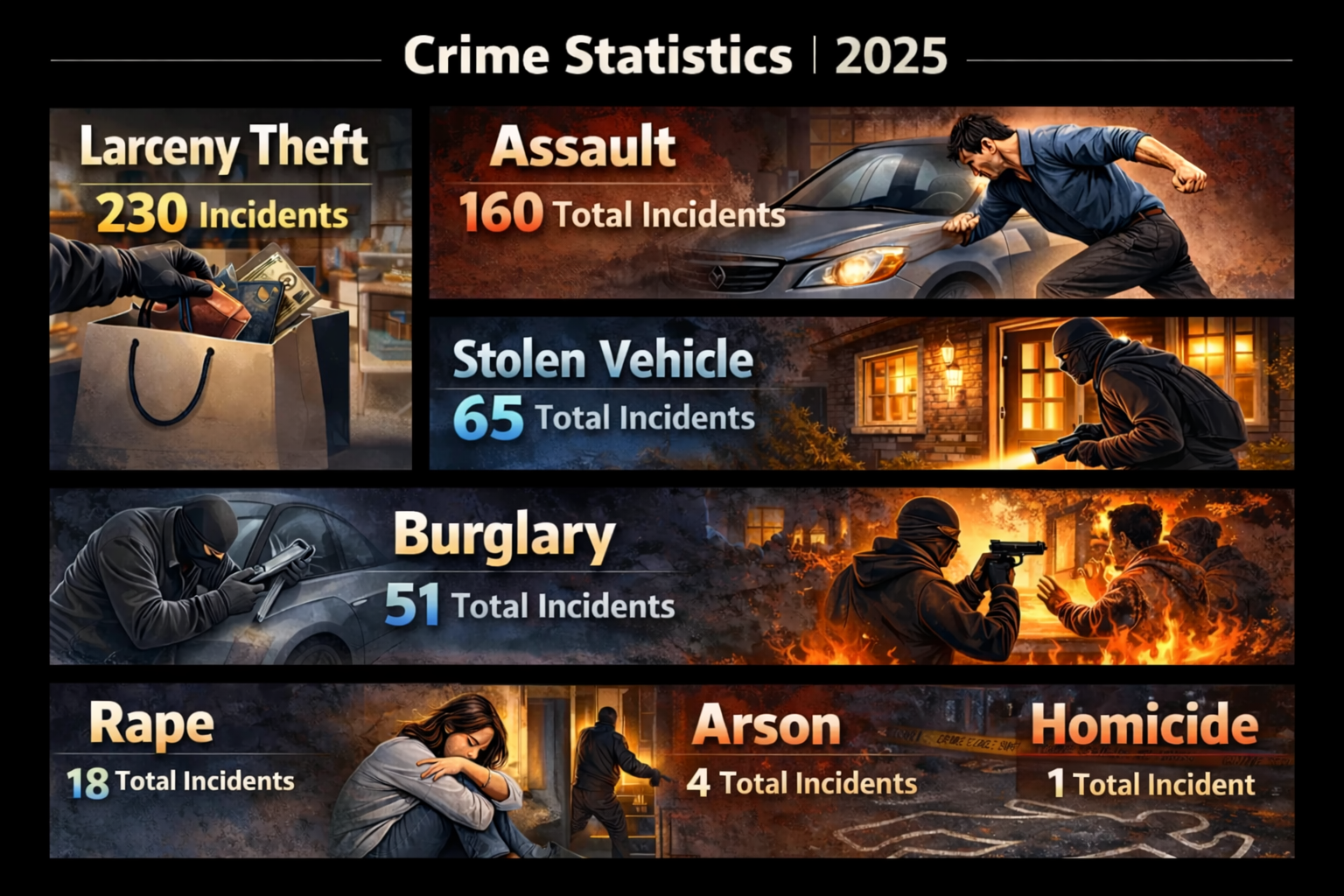
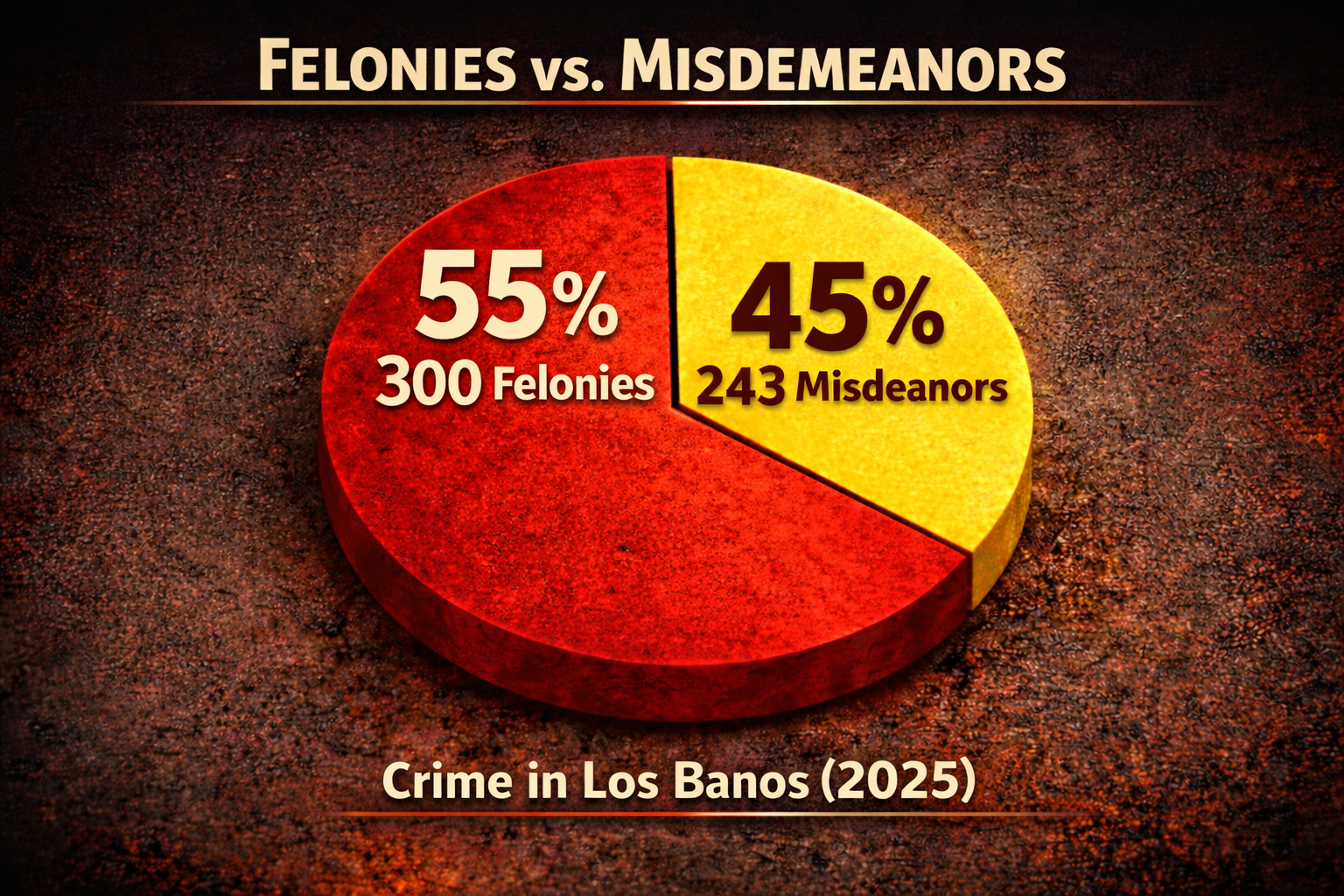
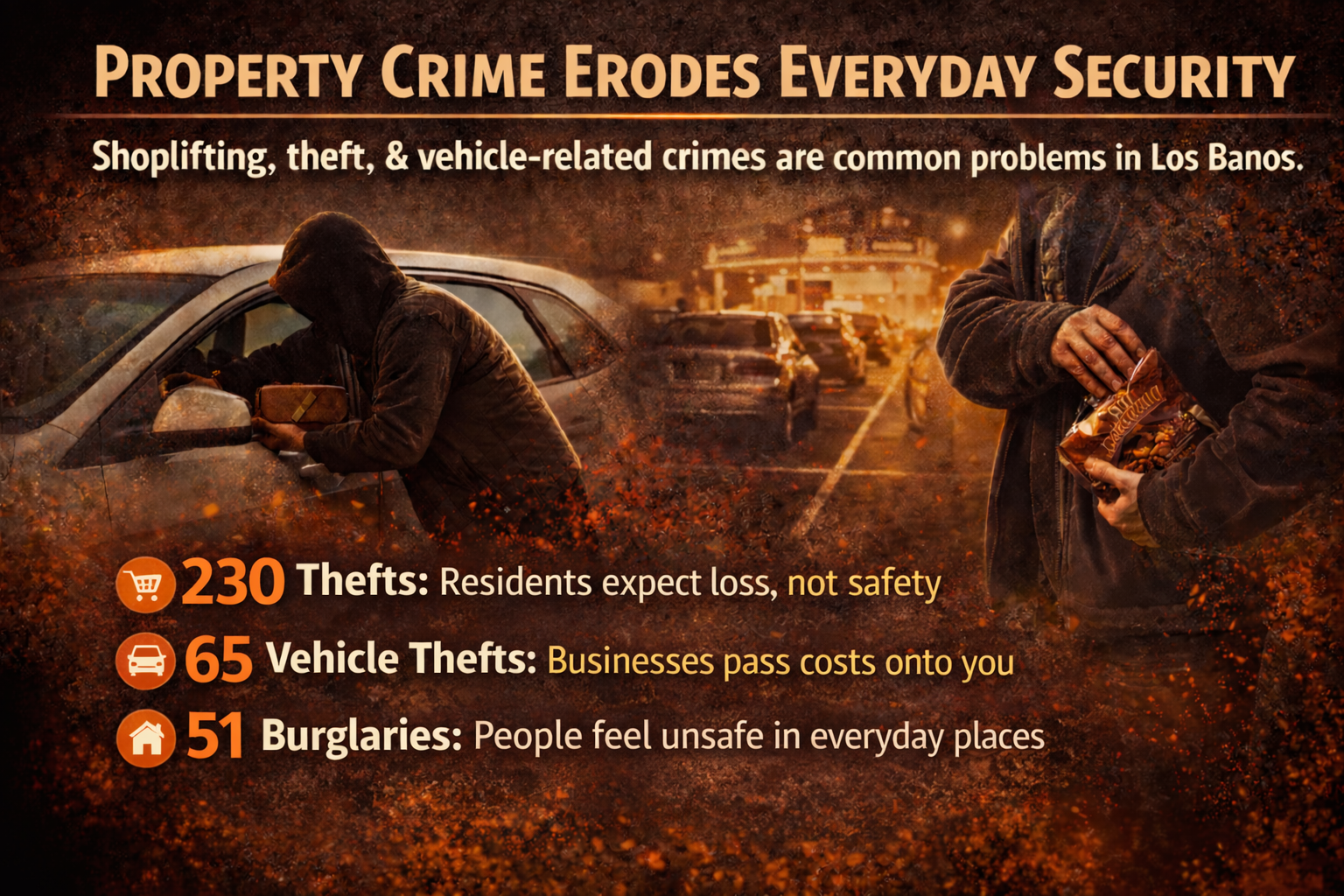
The 2025 crime data describes a community where safety is steadily breaking down, not through isolated incidents but through relentless repetition and severity. In a single extract, 543 crimes were reported, with 92% concentrated in just four categories—larceny theft (230 incidents), assault (160), stolen vehicles (65), and burglary (51)—meaning residents face the same risks again and again in everyday spaces. Violence is not peripheral: nearly one in three crimes is an assault, and 55% of all incidents (300 cases) are felonies, signaling a level of seriousness inconsistent with a stable environment. The presence of 18 reported rape cases, alongside robberies and homicides, underscores that extreme harm is not absent but embedded within the broader pattern, especially in a category known to be underreported. Taken together, these numbers point to a place where insecurity is becoming normalized—where property loss, physical danger, and serious crime are part of routine life. This is not a temporary spike or a contained problem. It is a clear statistical warning that conditions are deteriorating and, without targeted intervention, likely to worsen.
Living Here Means Living With Risk
At first glance, this community may look like any other. Streets are busy, stores are open, people go about their daily routines. But the data tells a harsher story — one that plays out hundreds of times a year, often out of sight, but never without consequence.
During year 2025, 543 criminal incidents were recorded in Los Banos. That is not an abstract statistic. That is hundreds of moments where safety broke down — where property was taken, violence occurred, or lives were disrupted.
And these incidents are not evenly spread or rare anomalies. They follow a pattern. A dangerous one.

In Los Banos Crime Is Not Random — It’s Concentrated
This concentration matters. It means residents are repeatedly exposed to the same risks: theft in public and commercial spaces, physical confrontations that escalate into violence, and the loss of personal mobility through stolen vehicles.
When crime clusters like this, it stops being bad luck. It becomes a feature of daily life.
This is not a place where crime is occasional or isolated.
It is a place where risk is routine.
People living here are far more likely than they should be to encounter theft, intimidation, or violence — directly or indirectly.
Violence Is a Constant Undercurrent
Assault is not a fringe problem here — it is one of the dominant crime types. Many of these incidents involve personal or domestic contexts, where conflicts turn physical and the consequences can be severe.
This isn’t just about numbers. Assault crimes create fear that lingers:
Fear of confrontation
Fear of escalation
Fear that everyday disputes can turn dangerous without warning
When violence becomes common, people change how they move, where they go, and when they feel safe.
Crime in this area is frequent, concentrated, and often severe.
The danger isn’t just in the worst-case scenarios — it’s in how common these incidents have become.
When hundreds of crimes occur in a short span, when violence is one of the leading categories, and when felonies make up the majority of cases, the message is unmistakable.
In Los Banos Crime Is Not Random — It’s Concentrated
This concentration matters. It means residents are repeatedly exposed to the same risks: theft in public and commercial spaces, physical confrontations that escalate into violence, and the loss of personal mobility through stolen vehicles.
When crime clusters like this, it stops being bad luck. It becomes a feature of daily life.
This is not a place where crime is occasional or isolated.
It is a place where risk is routine.
People living here are far more likely than they should be to encounter theft, intimidation, or violence — directly or indirectly.
Property Crime Erodes Everyday Security
The most common offenses involve theft, shoplifting, and vehicle-related crimes. These incidents may not always make headlines, but they quietly undermine quality of life.
When property crime is this frequent:
Residents expect loss, not safety
Businesses absorb costs that get passed on to everyone
People stop feeling secure even in routine spaces like parking lots and stores
Safety isn’t just about avoiding violence — it’s about not constantly bracing for the next incident.
Sexual Violence: The Crime That Rarely Shows Its Full Scale
Sexual crimes occupy a unique and deeply troubling place in any crime dataset — not because they are the most frequent, but because they are the most underreported, traumatic, and enduring.
In this area, rape and sexual offenses are present in the official crime record. Each entry represents more than a statistic. It represents a person whose bodily autonomy was violated, often with consequences that extend far beyond the moment of the crime.
And what the data shows is almost certainly only a fraction of the reality.